
Using Cross-Functional Efforts to Advance Equity-Focused Transformation
Observations from the Frontier Set
Publication Date: 2022
Format: Brief (PDF)
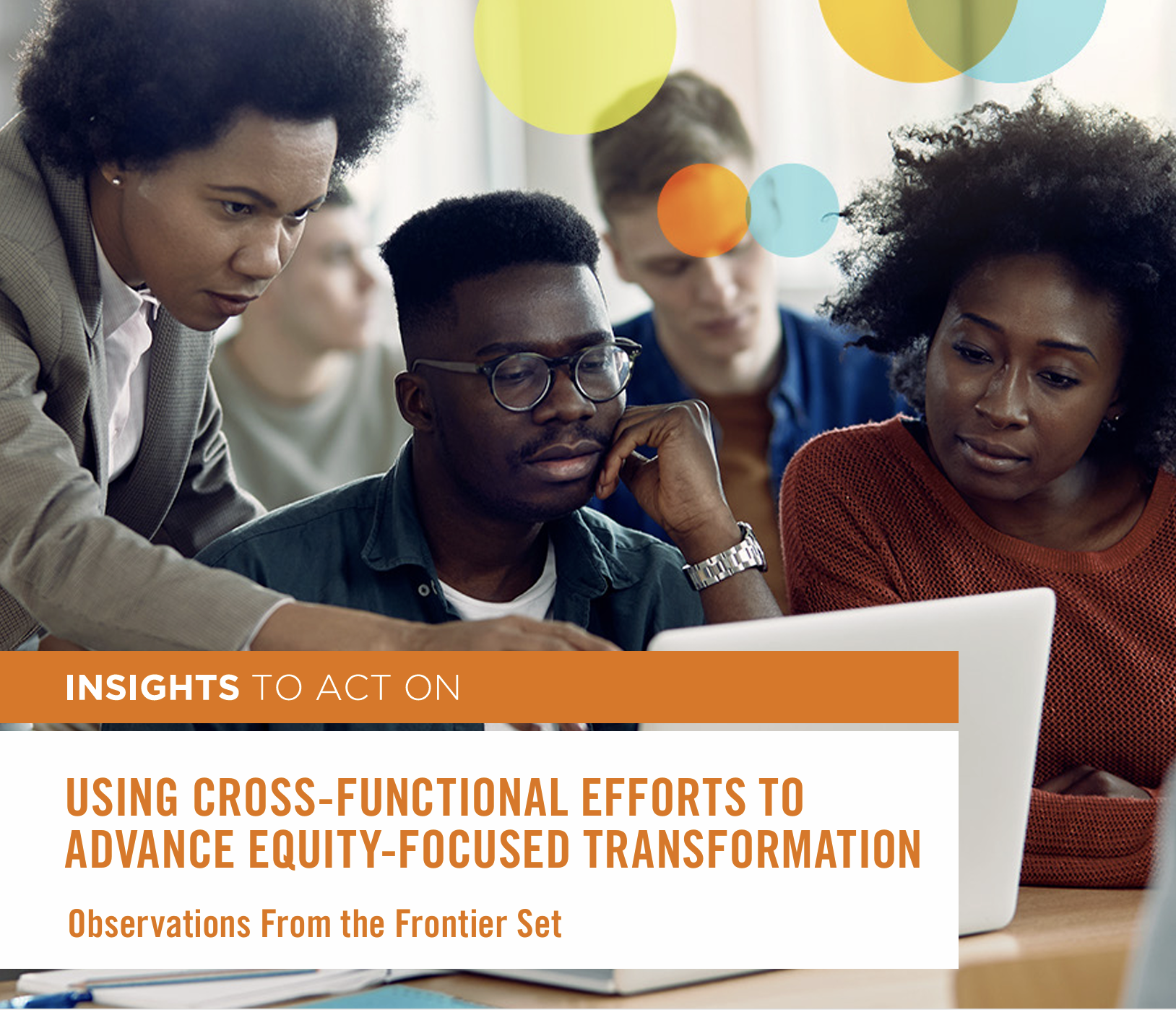
This brief highlights how institutions in the Frontier Set used cross-functional collaboration as a foundational strategy to advance equity-centered transformation. Drawing on four years of site engagement and institutional learning, it demonstrates how colleges and universities built formal and informal structures that fostered shared ownership, integrated student support, and accelerated implementation. Through real-world examples, the brief illustrates how cross-functional teams—grounded in data, distributed leadership, and inclusive dialogue—broke down silos and helped translate equity goals into coordinated, student-centered action.
Connections to the Transformation Journey
and How Institutions Transform
Stages of Transformation
- Start the Process: This brief supports institutions launching transformation by showing how cross-functional teams created shared purpose and aligned planning structures. Examples include institutions using flat leadership models to broaden engagement and forming design teams that included staff, faculty, and student affairs professionals to co-own strategy development.
- Act with Purpose: Institutions used collaborative structures to operationalize reform. For example, one campus created a cross-unit data collaborative that used real-time evidence to inform decisions about advising redesign and student support coordination.
Learn more about the Transformation Journey and How Institutions Transform.
Evidence-Based Practices
- Holistic Supports: The brief showcases how cross-functional teams helped integrate academic, financial, and wellness supports into coherent systems. One institution formed a joint committee to align support services with equity goals, using student experience data to coordinate outreach and close service gaps.
Learn more about the Transformation Journey and How Institutions Transform.
Core Institutional Capacities
- Catalytic Leadership: Senior and mid-level leaders enabled collaboration by modeling inclusive practices and structuring teams for success. One institution convened a cross-functional steering group to guide student success efforts, assigning shared accountability and decision-making authority across roles.
- Strategic Data Use: Institutions used disaggregated student data and frontline insights to inform reform. One cross-functional team reviewed both quantitative outcomes and qualitative student feedback to adapt academic policies and improve support strategies.
Learn more about the Transformation Journey and How Institutions Transform.
Continuous Improvement
This resource is most relevant to the following cross-functional roles:
- Senior Leaders: Leaders can use this brief to understand how to structure and resource cross-functional teams, delegate authority, and create conditions for sustained collaboration.
- Mid-Level Leaders: Mid-level professionals served as team leads, facilitators, and connectors—ensuring ideas moved from planning into implementation.
- Faculty & Core Staff: The brief illustrates how faculty, advisors, and institutional researchers contributed to transformation by co-creating reforms and aligning daily work with institutional equity goals.
This resource connects to the following phase(s) of the PRPAM framework:
- Reflect: Institutions used inclusive reflection practices—such as shared data reviews, town halls, and multi-role design teams—to assess barriers and identify equity-focused solutions. These routines helped build shared understanding and strategic alignment across departments.
Learn more about the Transformation Journey and How Institutions Transform.
Stages of Transformation
- Start the Process: This brief supports institutions launching transformation by showing how cross-functional teams created shared purpose and aligned planning structures. Examples include institutions using flat leadership models to broaden engagement and forming design teams that included staff, faculty, and student affairs professionals to co-own strategy development.
- Act with Purpose: Institutions used collaborative structures to operationalize reform. For example, one campus created a cross-unit data collaborative that used real-time evidence to inform decisions about advising redesign and student support coordination.
Learn more about the Transformation Journey and How Institutions Transform.
Evidence-Based Practices
- Holistic Supports: The brief showcases how cross-functional teams helped integrate academic, financial, and wellness supports into coherent systems. One institution formed a joint committee to align support services with equity goals, using student experience data to coordinate outreach and close service gaps.
Learn more about the Transformation Journey and How Institutions Transform.
Core Institutional Capacities
- Catalytic Leadership: Senior and mid-level leaders enabled collaboration by modeling inclusive practices and structuring teams for success. One institution convened a cross-functional steering group to guide student success efforts, assigning shared accountability and decision-making authority across roles.
- Strategic Data Use: Institutions used disaggregated student data and frontline insights to inform reform. One cross-functional team reviewed both quantitative outcomes and qualitative student feedback to adapt academic policies and improve support strategies.
Learn more about the Transformation Journey and How Institutions Transform.
Continuous Improvement
This resource is most relevant to the following cross-functional roles:
- Senior Leaders: Leaders can use this brief to understand how to structure and resource cross-functional teams, delegate authority, and create conditions for sustained collaboration.
- Mid-Level Leaders: Mid-level professionals served as team leads, facilitators, and connectors—ensuring ideas moved from planning into implementation.
- Faculty & Core Staff: The brief illustrates how faculty, advisors, and institutional researchers contributed to transformation by co-creating reforms and aligning daily work with institutional equity goals.
This resource connects to the following phase(s) of the PRPAM framework:
- Reflect: Institutions used inclusive reflection practices—such as shared data reviews, town halls, and multi-role design teams—to assess barriers and identify equity-focused solutions. These routines helped build shared understanding and strategic alignment across departments.
Learn more about the Transformation Journey and How Institutions Transform.
Recommended Citation: VentureWell & American Institutes for Research. (2022). Using cross-functional efforts to advance equity-focused transformation: Observations from the Frontier Set.